
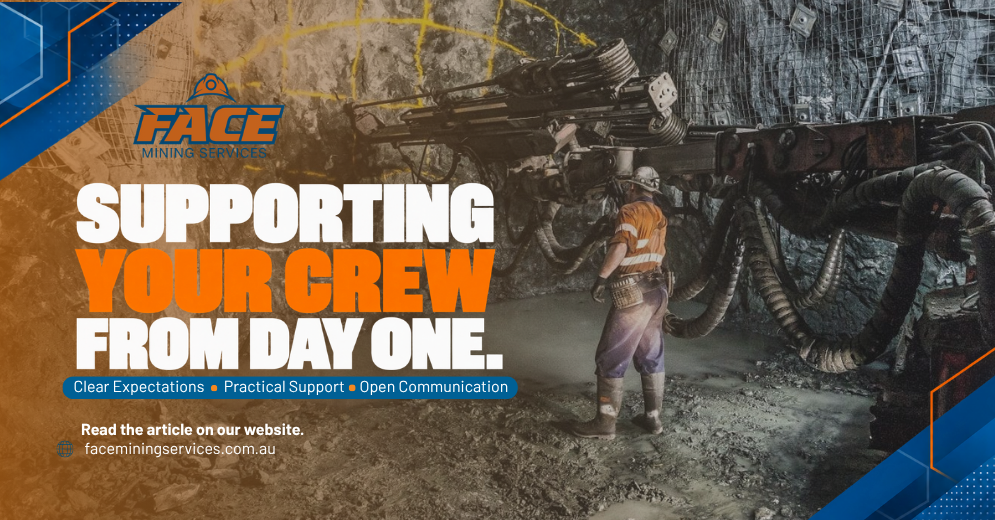

Supporting Underground Crews From Day One
At FACE Mining Services, we believe people should feel part of a team, not just another number on a roster. That starts well before they arrive on site.
Supporting an underground crew means understanding the work, bringing together the right skills and making sure people know what to expect. From the equipment and site conditions to the team they’ll be working alongside, practical preparation helps people arrive with a clearer understanding of where they fit and who they can turn to.
Our approach brings together underground operational support and workforce management, with clear communication and ongoing involvement as the crew and the operation’s needs develop.
Start With The Skills The Operation Needs
The equipment, tasks and site environment should guide the skills and experience required within the crew. Understanding these requirements early helps identify where specialist experience, training or additional support may be needed.
Attitude matters alongside experience. A willingness to learn, communicate and work with others is part of how a crew settles into an operation. Allowing for skills availability and preparation also helps establish a realistic mobilisation date.
Give People A Clear Start On Site
Crew leaders need a clear understanding of the work, responsibilities and expectations before guiding others. New starters should know who their supervisor is, what is expected of them and where to go for support.
Practical arrangements matter too. Confirming travel, transfers, accommodation and a reachable contact helps people know what to expect on arrival. This is particularly important for people travelling internationally or joining an unfamiliar site.
International mobilisation also means working through visas, work rights, inductions and competency requirements. These vary between countries and operations, so understanding what is required, who is responsible and the time needed to prepare is an important part of planning.
For the person joining the crew, knowing someone is available to answer questions and help them settle in can make a real difference
Keep Site And Workforce Teams Connected
Before mobilisation, the owner and contractor need agreement on the scope, commercial arrangements and management expectations. Site and workforce teams also need to understand their responsibilities and how they will coordinate the work.
Once people are on site, keep that communication open. Crew members should feel comfortable asking questions, raising concerns and contributing their experience. When plans change, explain what has changed, who is responsible for the next step and how the crew will be supported.
Working closely with the existing site team also helps new starters become part of the wider operation and understand how their work contributes to the job at hand.
Keep Checking In As The Work Develops
Regular check-ins with the crew and site team help establish how the plan is working in practice. Do people understand their roles and key contacts? Is training organised and progressing? Are supervisors approachable, and are questions being followed up? These conversations help identify where further guidance or support is needed.
The first month provides an early opportunity to review how people are settling in. Follow-up should continue as tasks, equipment and team requirements change. Safety, appropriate training and supervision remain priorities throughout the work, with any issues identified followed through to an agreed action.
Planning an underground mobilisation or looking for support for an existing crew?
Contact FACE Mining Services to discuss your workforce requirements, from initial preparation to ongoing support on site.
Practical Support for New and Existing Crews
FACE provides underground operational and workforce management solutions, bringing together skilled people, experienced leadership, training and practical support on site.
Whether you’re preparing a new mobilisation or strengthening an existing underground crew, we can work with you to understand the challenges, identify the support required and help put it into practice.


